Title: The Art of Dinner Menu Design: A Comprehensive Analysis
Introduction:
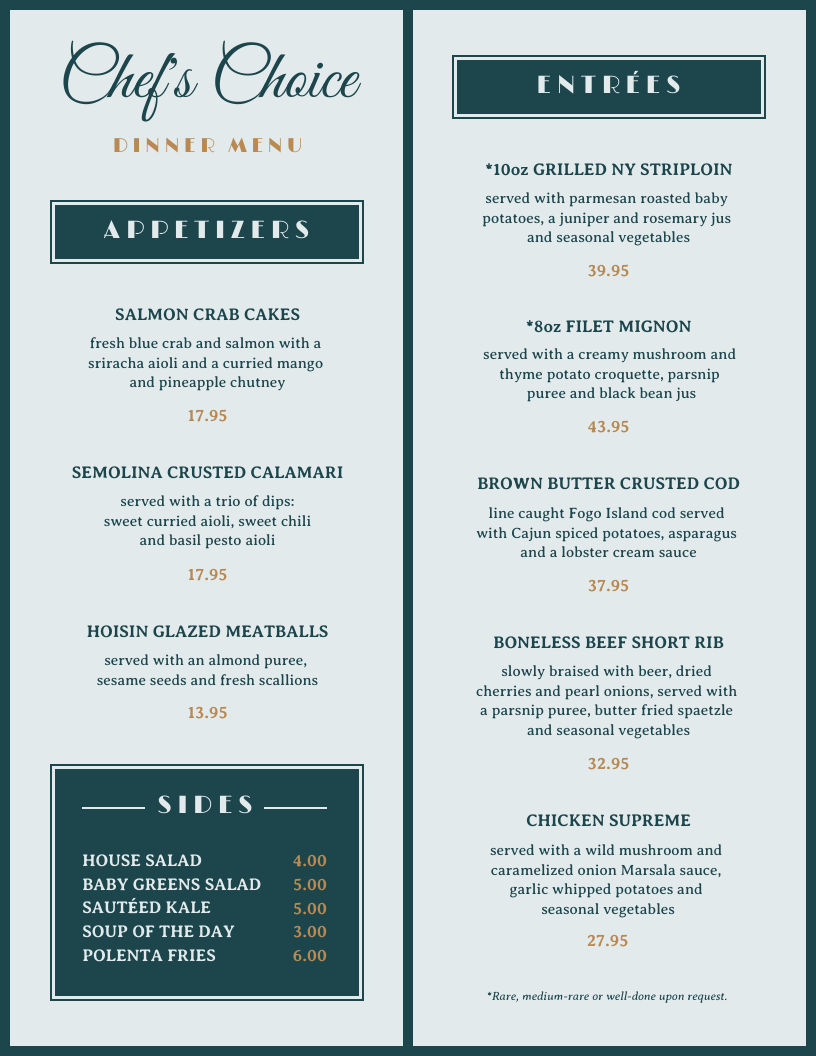
A dinner menu is more than just a list of dishes; it is a reflection of culinary art, cultural heritage, and the chef’s creativity. The design of a dinner menu plays a crucial role in enhancing the dining experience and leaving a lasting impression on the guests. This article aims to explore the various aspects of a dinner menu, including its purpose, structure, and the elements that make it effective. By analyzing different examples of dinner menus, we will gain insights into the art of menu design and its significance in the culinary world.
The Purpose of a Dinner Menu
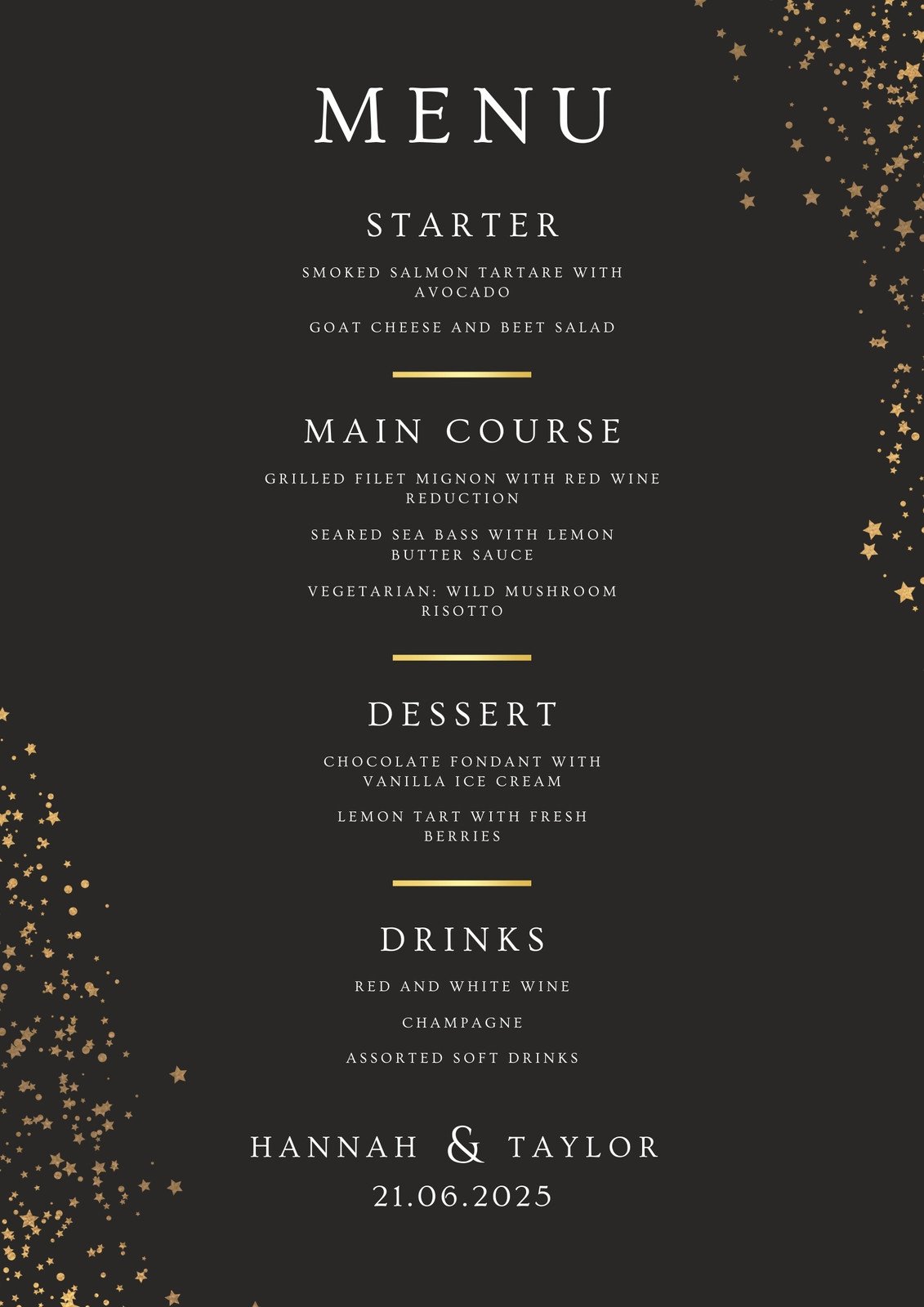
The primary purpose of a dinner menu is to inform the guests about the available dishes and provide them with a glimpse of the culinary experience they can expect. A well-designed menu can accomplish the following objectives:
1. Informing the Guests: A menu serves as a guide, helping guests make informed decisions about their meal choices. It provides details about the ingredients, cooking methods, and portion sizes, enabling them to select dishes that cater to their preferences and dietary restrictions.
2. Enhancing the Dining Experience: A visually appealing and thoughtfully curated menu can create an anticipation of the culinary delights to come. It sets the tone for the dining experience, making it more enjoyable and memorable.
3. Promoting the Restaurant’s Brand: A unique and creative menu design reflects the restaurant’s identity and brand. It helps in establishing a distinct image in the minds of the customers, making them more likely to return.
Structural Elements of a Dinner Menu
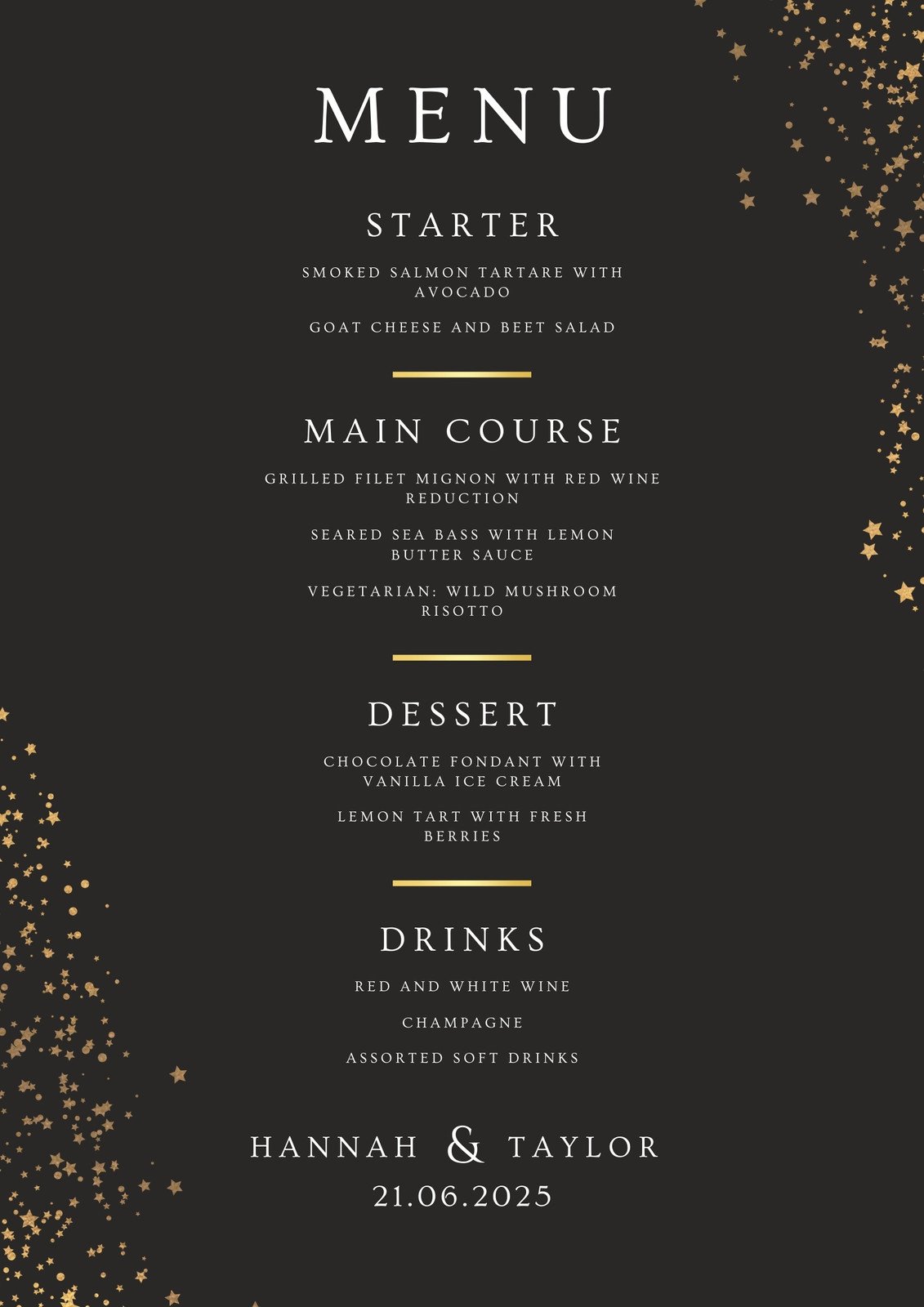
The structure of a dinner menu is crucial in ensuring that it is easy to navigate and visually appealing. Here are some key structural elements:
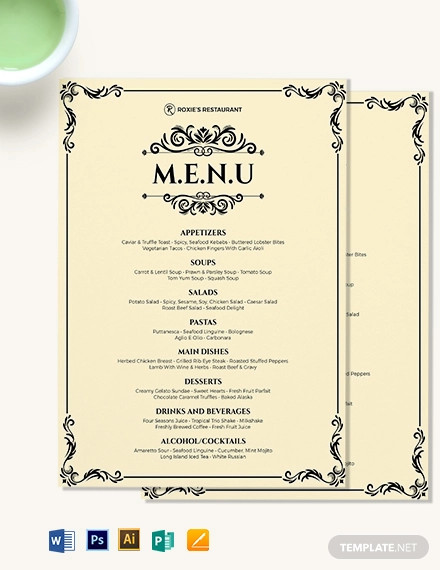
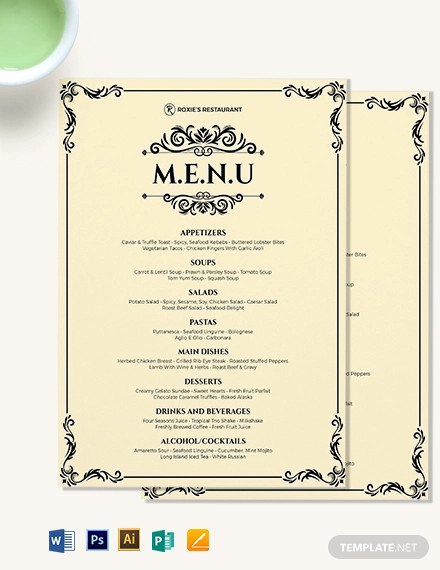
1. Header: The header typically includes the restaurant’s name, logo, and contact information. It sets the stage for the menu and creates a first impression.
2. Navigation: A clear and logical navigation system helps guests easily find the sections they are interested in. Common sections include appetizers, main courses, desserts, and beverages.
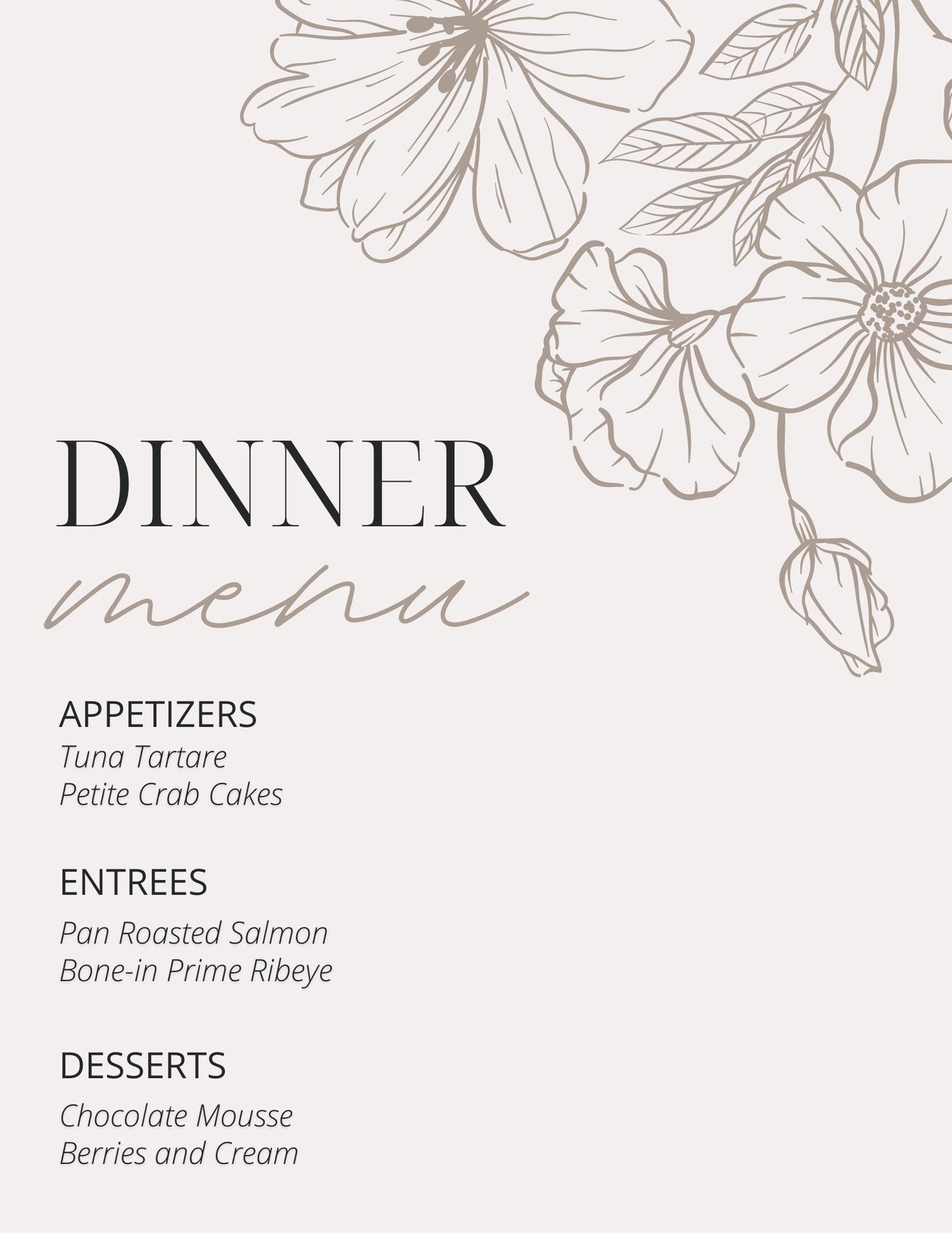
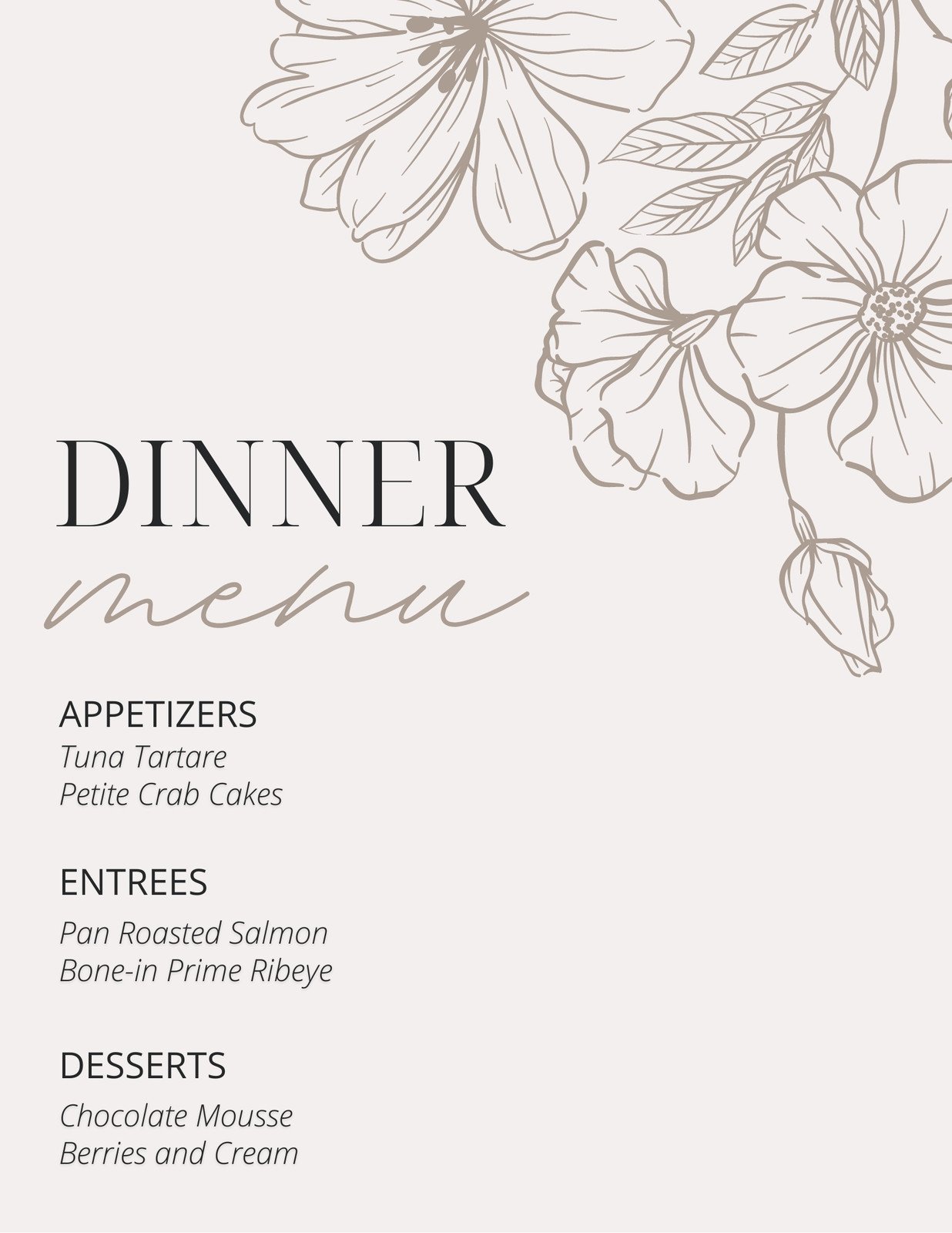
3. Font and Layout: The choice of font and layout significantly impacts the readability and overall aesthetic of the menu. A well-chosen font and layout can make the menu visually appealing and easy to navigate.
4. Images and Illustrations: Including high-quality images and illustrations of the dishes can entice guests and provide a better understanding of the food’s appearance and presentation.
Elements of an Effective Dinner Menu
An effective dinner menu should possess the following elements:
1. Curation: The menu should offer a diverse range of dishes that cater to different tastes and preferences. It should showcase the chef’s expertise and the restaurant’s culinary strengths.
2. Seasonality: Incorporating seasonal ingredients not only ensures freshness but also reflects the chef’s commitment to sustainability and culinary excellence.
3. Price Points: A well-balanced menu should offer a variety of price points, catering to different budgets and preferences. This ensures that there is something for everyone.
4. Specialty Dishes: Including signature or specialty dishes can differentiate the restaurant from its competitors and create a unique dining experience.
5. Dietary Options: Offering vegetarian, vegan, and gluten-free options demonstrates the restaurant’s commitment to inclusivity and catering to diverse dietary needs.
Example of a Dinner Menu
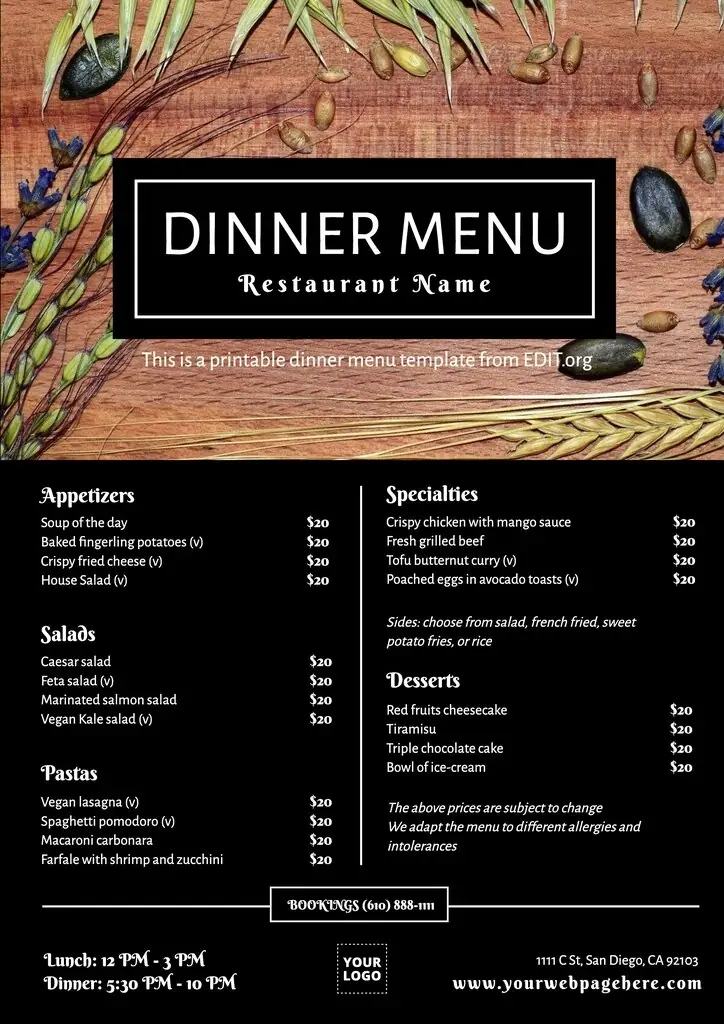
Let’s take a look at an example of a dinner menu to illustrate the concepts discussed above:
—
The Gourmet Bistro
Appetizers
– Classic Caesar Salad
– Seared Scallops with a Lemon Butter Sauce
– Stuffed Mushrooms
Main Courses
– Herb-Crusted Roast Chicken
– Grilled Salmon with a Dill Sauce
– Beef Tenderloin with a Red Wine Reduction
Desserts
– Chocolate Lava Cake
– Fresh Fruit Tart
– Vanilla Bean Ice Cream
Beverages
– Selection of Wines
– Craft Beers
– Signature Cocktails
—
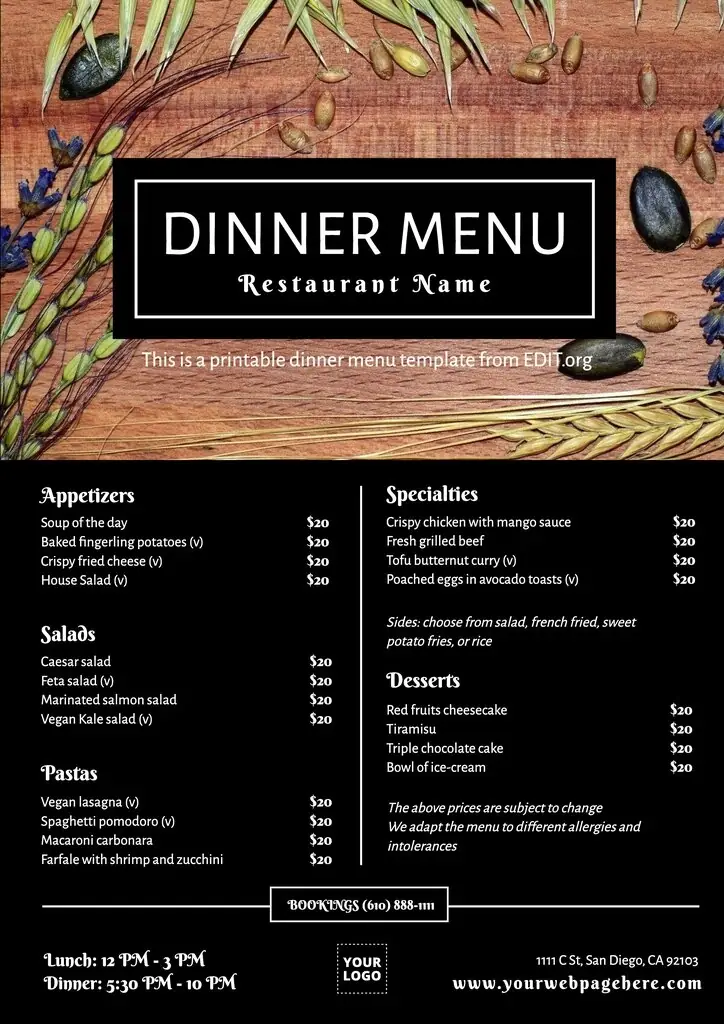
In this example, the menu offers a diverse range of dishes, catering to different tastes and preferences. The use of high-quality images and a clear navigation system makes it visually appealing and easy to navigate. The inclusion of specialty dishes and dietary options further enhances the menu’s effectiveness.
Conclusion
The design of a dinner menu is an essential aspect of the culinary experience. A well-crafted menu can inform guests, enhance the dining experience, and promote the restaurant’s brand. By analyzing different examples of dinner menus and understanding the key elements of an effective menu, chefs and restaurateurs can create memorable dining experiences for their guests.
In conclusion, the art of dinner menu design is a blend of culinary expertise, creativity, and attention to detail. It is crucial for chefs and restaurateurs to invest time and effort in creating a menu that not only showcases their culinary skills but also caters to the diverse tastes and preferences of their guests. As the culinary world continues to evolve, the importance of a well-designed dinner menu will only grow, making it an essential tool for success in the restaurant industry.
Future Research:
Further research can focus on the impact of menu design on customer satisfaction and loyalty. Additionally, exploring the role of technology in menu design, such as digital menus and interactive experiences, can provide valuable insights into the evolving landscape of the culinary industry.